The 50-Employee Inflection Point Where PEO Co-Employment Costs Outweigh Its Purchasing Leverage
Most PEOs lose their economic advantage once companies reach 50 employees.

A PEO’s per-employee cost includes administration, benefits pass-throughs and ancillary charges, so comparing its headline fee with a broker or AI-native benefits platform price is not a like-for-like comparison. Around 50 employees, direct access to large-group health insurance can remove the purchasing advantage that justified those charges. Whether to leave depends on the full costs, including services to replace, FICA savings the company can recover and the work needed to make the switch.
How a PEO's core value proposition works — and what it depends on
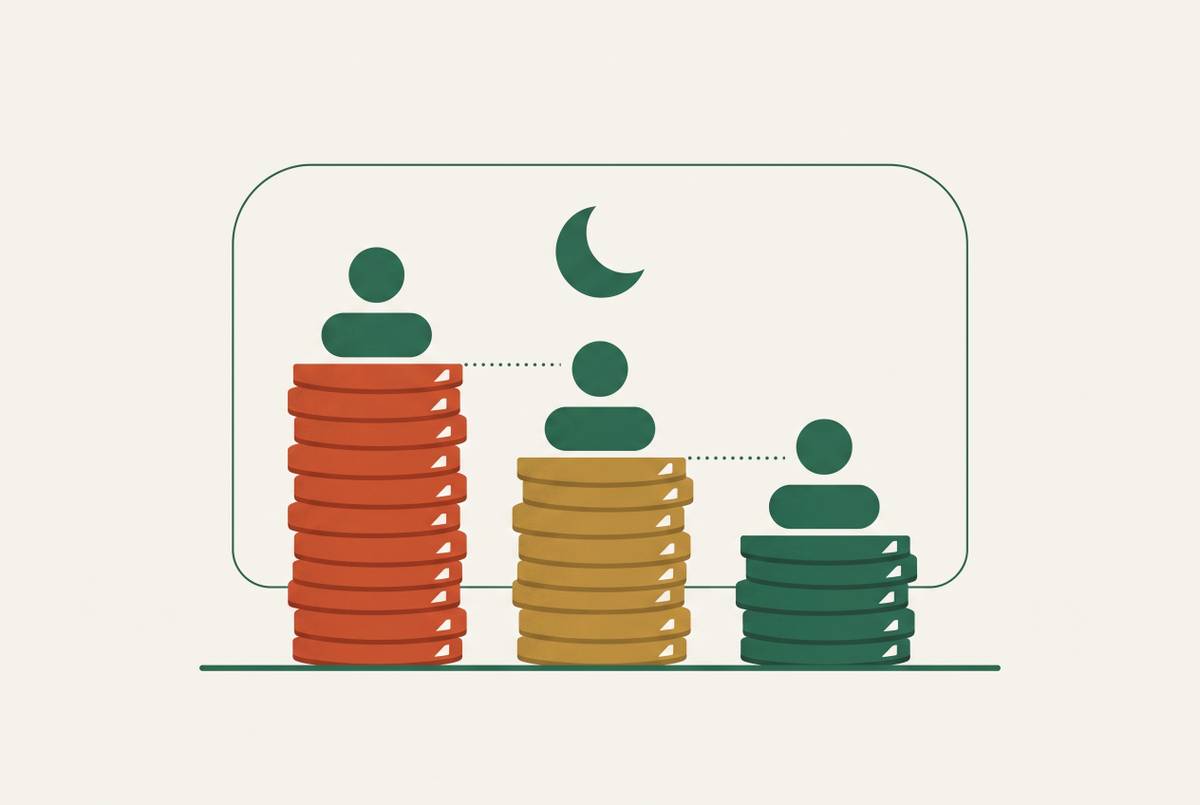
A PEO creates its primary economic advantage by pooling employees across client companies to negotiate large-group health insurance rates. Co-employment supplies the legal structure. The PEO becomes the employer of record for tax, benefits and insurance purposes, while the client retains day-to-day control. Small-group plans follow community rating rules, but the PEO’s pool of thousands can get large-group pricing that a small employer cannot get on its own.
That buying power is why employers agree to buy the services as a bundle. Payroll tax filing, workers’ compensation administration and compliance guidance also have value, but employers can buy each on its own. Their convenience does not, by itself, establish that co-employment is the cheapest way to obtain them. The economic case therefore depends on whether pooling still delivers an advantage at the company’s current headcount.
What does a PEO actually cost per employee as headcount grows?
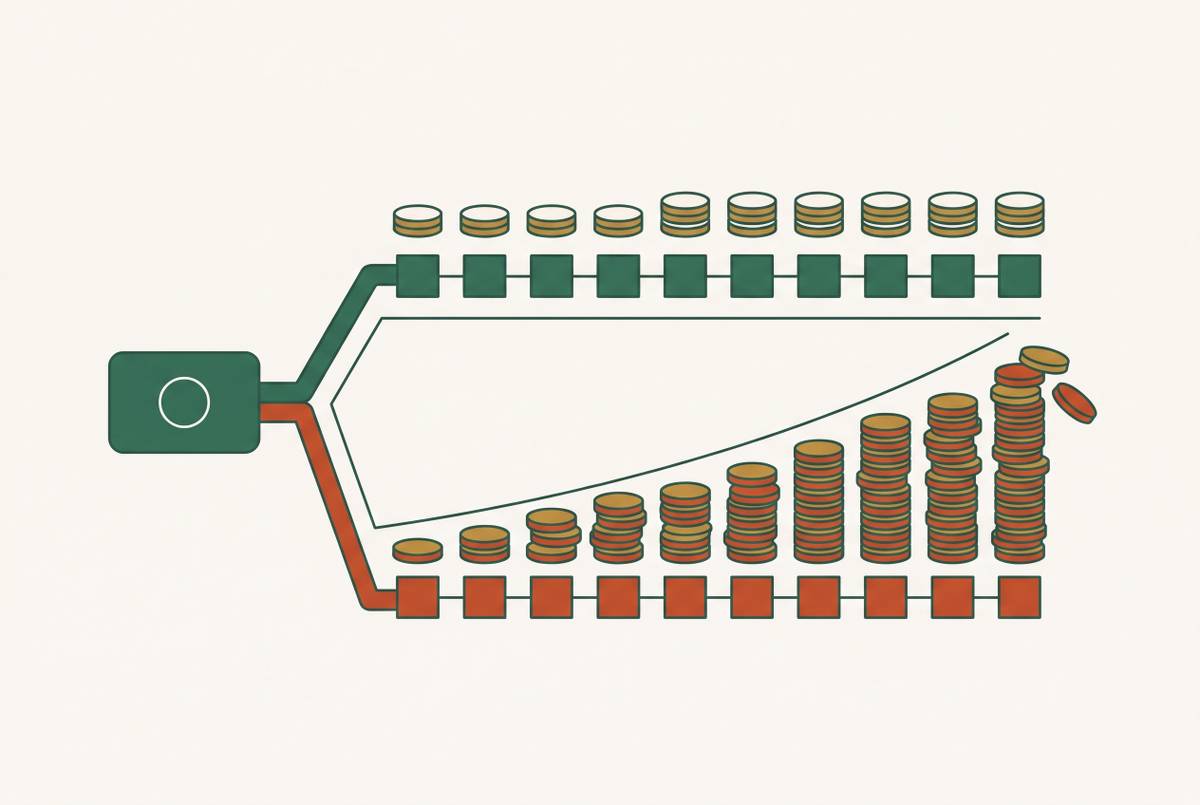
PEO administrative fees are not fixed overhead. With per-employee-per-month pricing, or PEPM, the employer pays a flat amount for each employee, no matter what their salary is. The rate can remain unchanged while the total bill rises with every hire. Percentage-of-payroll pricing adds another source of growth because fees increase with compensation as well as workforce size. That structure is particularly costly for high-salary workforces such as tech companies.
Merit increases can therefore raise the PEO’s revenue without expanding its service scope. PEPM pricing avoids that salary-linked increase, but neither model establishes the full cost of the arrangement. Setup fees, benefits markups and state-registration charges can sit above the quoted rate, while recurring and usage-based charges complicate comparison further. The fee earns its return only when the administration it replaces and the insurance savings it produces exceed those costs. Otherwise, it functions as a per-head tax on growth.
The large-group rate threshold and why it makes 50 employees the pivot
Large-group eligibility varies by state because states set different headcount requirements for access to that market. Some require a higher minimum, so crossing 50 employees does not establish eligibility everywhere. The lower end remains the operative starting point across most jurisdictions, however, because this is where independent access becomes a live possibility. The relevant threshold is the one governing the company’s coverage.
At that point, two forces converge. The administrative bill continues rising as the company hires, while the rate access that justified the fee can become available under the employer’s own EIN. This does not prove that every independent quote will beat the PEO’s renewal.
A dedicated broker working with a company of 50 or more employees can often negotiate comparable or better carrier rates, with greater plan-design flexibility. An employer’s belief that its PEO still negotiates better is therefore a proposition to test against the market. The inflection spans several dozen employees.
The FICA savings that flow to the PEO instead of the employer
Through a Section 125 cafeteria plan, employees pay their share of premiums before tax, and employers owe no FICA taxes on those contributions. Under the co-employment structure described here, those employer savings flow to the PEO as the employer of record for payroll purposes. The client company does not retain them directly.
This cost is separate from the administrative fee. It grows with headcount and can become material in the 50–100 employee range, even though it rarely appears prominently in a sales pitch. When the company exits and operates its own Section 125 plan, it can recover that employer tax benefit. A comparison that excludes it understates the direct alternative’s economic value, particularly once the PEO’s purchasing advantage has narrowed.
What limited cost visibility inside a PEO bundle costs in decision-making
Bundled invoices obscure the point at which co-employment stops paying for itself. Administrative fees, benefits markups and pass-through costs appear together, so it is hard to tell how much pays for services and how much pays for insurance. BPM, an accounting and advisory firm, notes that growing companies can struggle to identify what they pay for individual services within a PEO bundle.
The headline PEPM is therefore not the budget. Benefits and workers’ compensation pass-throughs can make the all-in cost per employee meaningfully higher, while percentage-based charges can grow without a change in service. Leaders may see a higher benefits bill without being able to tell how much of it goes to the vendor. As a result, the company can pass the large-group threshold without recognizing that the original economic bargain has changed.
The practical response is a broker-led analysis that separates the bundle into comparable functions. That analysis belongs at every renewal cycle.
The compliance obligations that arrive at 50 employees regardless of HR model
Under the ACA, an employer that averaged 50 or more full-time employees, counting full-time equivalents, during the prior calendar year is an Applicable Large Employer, or ALE. That status triggers the employer mandate to offer minimum essential coverage to full-time employees, with potential penalties under §4980H(a) and §4980H(b) for noncompliance. Co-employment does not remove the threshold.
FMLA also uses a 50-employee threshold, but its counting method differs. It measures headcount across a specified number of workweeks rather than using the ACA’s full-time-equivalent calculation. Multi-state employers may also have to meet state-level reporting requirements as well as federal ACA obligations.
Other duties sit on either side of this threshold. COBRA administration attaches at 20 employees, while ERISA Form 5500 filing applies to employers sponsoring group health and welfare plans with at least 100 plan participants at the beginning of the plan year. For calendar-year plans, the filing deadline is seven months after year-end, with daily DOL penalties for late filing. A PEO exit changes who administers these obligations.
Why plan design flexibility is itself a cost lever that PEOs foreclose
Independent rate access is only part of the potential savings. A PEO offers its own menu of plans, which limits an employer’s ability to shape coverage around its workforce. A standardized option may be convenient without being the most economical fit for a younger tech population.
Level-funded coverage illustrates the distinction clearly. The employer pays a fixed monthly amount covering expected claims, stop-loss insurance and administration, with a refund if claims fall below projections. Most PEO menus do not offer this middle path between fully insured and self-insured coverage. A high-deductible health plan paired with an HSA can likewise be tailored through specific HSA seed contributions.
Outside co-employment, an employer can look at carrier pricing, plan structure and employee cost-sharing together at renewal. The savings are not guaranteed, but restricting the available designs excludes potential cost reductions before they can be evaluated.
What a PEO exit actually requires operationally and when to time it
For an employer whose analysis supports departure, execution becomes a scheduling and ownership problem. Leaving a PEO takes months of work on benefits, payroll, insurance and compliance. Before the old arrangement ends, the new one must make clear who will handle each task.
The dates are not interchangeable scheduling preferences. Aligning departure with benefits renewal avoids mid-year plan disruption and gives the new broker the natural window to negotiate coverage. For a standard, non-IRS-certified PEO, a January 1 payroll transition is essential because a mid-year exit can reset payroll tax withholding and create employment tax liabilities for the company and its workforce.
Some PEOs also require new offer letters for every employee during transition. Workers’ compensation coverage ends with the PEO relationship, so the employer’s own policy must be effective on the first day outside it. With a 60-to-90-day preparation window, discovering the financial case at renewal may already be too late for that cycle. The analysis should begin four to six months beforehand.
The alternative model — what replaces a PEO after the exit
For most tech companies beyond the threshold, the replacement is a dedicated benefits broker supported by a modern HRIS. The broker negotiates directly with carriers, while the company owns its plan and can design it for its workforce. Standalone payroll platforms handle payroll and taxes, including multi-state registration, tax filing and the work of running a Section 125 plan.
Compliance guidance can also be sourced separately. The company gets ongoing checks of federal, state and local rules in place of the guidance covered by the PEO fee. The employer still needs enough help, in-house or outsourced, to handle these tasks. Separating vendors makes the scope and ownership of each service more explicit.
AI-native brokerage adds plan analysis and help for employees to the work a broker has traditionally done. Predictive analysis can use past claims data to predict how much healthcare employees will use and help with talks with insurers. A model that sits on the existing HRIS can also preserve institutional knowledge and avoid replacing the platform. These capabilities belong in the evaluation, but they do not establish a universal price advantage.
To compare costs per employee fairly, the company needs separate quotes. The PEO price covers more services than a benefits broker’s charge, and the price of an AI-native platform must be weighed against the services it actually provides. Without those quotes, assigning comparable PEPM ranges would imply a precision the available figures do not support.
How to run the exit decision analysis before the next renewal cycle
The decision process should begin four to six months before renewal, using the current workforce rather than the assumptions that justified the original PEO contract. Finance should first separate the invoice into administration, benefits pass-throughs, workers’ compensation and ancillary charges. A broker-led market quote should then price comparable benefits at the company’s current headcount and workforce demographics, subject to the applicable large-group eligibility rules. The comparison must cover the same functions on both sides.
Recoverable employer FICA savings belong in the direct model as a distinct annual benefit. Transition costs belong there too, including several months of parallel administration, potential new offer letters and workers’ compensation policy origination. Their timing differs from the ongoing savings. Separating one-time work from recurring costs prevents a costly transition from being mistaken for an expensive operating model.
The employer should also check its ACA ALE status on its own and make sure it has what it needs to handle compliance before it leaves. If the direct alternative is cheaper on a fully loaded basis and the company can staff or outsource benefits administration and compliance, the analysis supports exit. The remaining task is to align execution with benefits renewal and the January 1 payroll transition.