LLM-Based Employee Benefits Concierge Tools
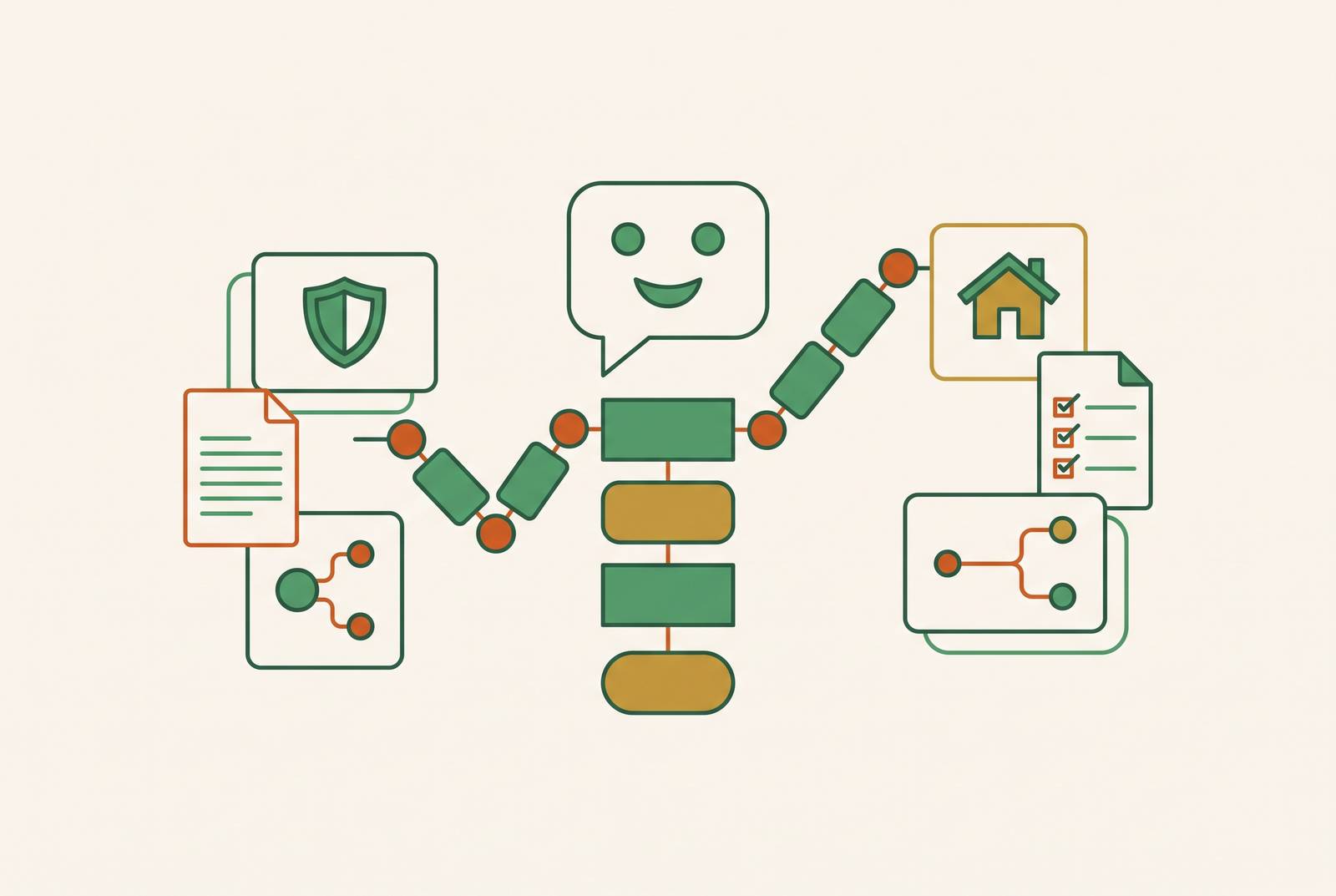
LLM-based benefits concierge tools are most valuable when understood as a two-layer system: a conversational AI surface sitting atop actuarial engines and structured plan data. That architecture, not the language model itself, determines what these tools can reliably do, where they still fall short, and what benefits leaders should expect when evaluating them. The distinction matters because most confusion about the category traces back to a failure to separate the layer that talks from the layer that calculates. Get the architecture right, and the tool becomes a precision instrument for plan selection, compliance surfacing, and renewal analytics. Get it wrong, and the conversational polish merely obscures underlying data gaps.
Why employees still struggle with benefits decisions despite better plan designs
An employee sits down during open enrollment and tries to decide between a high-deductible health plan with an HSA and a traditional PPO. The comparison involves deductibles, coinsurance, out-of-pocket maximums, network tiers, and the unpredictable question of what medical care the coming year will actually require. The employer has provided a benefits guide, a PDF of the plan summary, and a phone number that reaches a call center during business hours. None of these resources answers the question the employee actually has: given this specific household, with this expected utilization, which plan leaves them financially better off?
The gap is structural, not incidental. Employee-facing support infrastructure has not kept pace. An employee who misreads network coverage or misses an FSA deadline pays out of pocket for the mistake. An employer whose workforce chronically underuses cost-efficient plans pays in avoidable claims and retention pressure. The cost of a wrong decision lands on both sides of the relationship.
HR teams face a scale problem that no amount of internal staffing can solve. Individualized benefits guidance requires per-person context: dependents, expected utilization, financial situation, health literacy, preferred language. A human team cannot deliver that level of personalization to every employee at enrollment time, let alone year-round when questions arise about a new prescription, a pregnancy, or a surprise bill. The sophistication of the plans has outpaced the support infrastructure, and the consequences of that divergence compound annually.
What an LLM-based benefits concierge actually is — and what it is not
An LLM-based benefits concierge is a two-layer system. The first layer is a conversational AI surface that employees interact with in natural language. The division of labor is specific and consequential. The LLM layer handles language: it interprets a question like "which plan is better if someone is planning to have a baby next year," identifies the relevant variables, and translates a calculated answer back into plain language. The actuarial layer handles numbers: it holds pricing assumptions, rating logic, and plan-design parameters, and exposes structured APIs that the LLM calls with demographic, utilization, and plan-design inputs.
This separation is deliberate. The math stays deterministic even when the conversational surface is probabilistic. That distinction is what separates a benefits concierge from a general-purpose chatbot trained only on public data, which would lack employer-specific plan context entirely. It also separates the tool from a pure actuarial engine, which calculates correctly but cannot explain its outputs to a non-expert in plain language.
The architecture has a direct analog in other regulated industries. The framing that teams are explicitly building toward in 2026 is straightforward: LLM explains, actuarial engine scores. What the tool is not is equally clear: it is not a diagnosis tool, since clinical decisions are explicitly out of scope, and it is not a replacement for a licensed advisor on fiduciary questions. The category boundary matters because it defines where the architecture can be trusted.
What the conversational layer can do reliably, and where the architecture creates limits
The two-layer design determines the reliability ceiling of these tools. Where the actuarial layer supplies structured, current data, the conversational layer performs well. Where it does not, hallucination and outdated answers become predictable risks rather than anomalies. The high-reliability zone includes plan comparison for a defined employee profile, out-of-pocket projection under known utilization assumptions, enrollment deadline reminders, and network coverage lookups. In each case, the actuarial API returns a structured answer that the LLM only needs to explain, which keeps the probabilistic layer operating on firm ground.
It cannot handle edge cases in plan documents not yet ingested, recently changed carrier terms, multi-jurisdiction compliance questions where the underlying rules engine has gaps, or anything requiring clinical judgment. The portal's emptiness signals its own limitation. The conversational tool's fluency conceals it, and that concealment is precisely what makes guardrails essential.
Well-designed systems address this through several mechanisms. Oracle's Employee Concierge agent in HCM 26A illustrates the pattern: specialized subagents for Leave and Absence, Benefits, Compensation, and Payslip each retrieve from their own policy document corpus, scoping the domain so the retrieval layer stays accurate. Wisq's Harper represents a narrower-model approach, built on an HR-specific language model rather than a general-purpose LLM, with domain-specific reasoning evaluated against HR-scenario benchmarks, location-aware policy application, and human routing for judgment cases. Spine applies the same discipline to its AI concierge: it keeps conversational assistance grounded in plan-specific data and compliance rules through explicit scope limitations, defined escalation paths, and retrieval over approved sources.
How the broker-facing and employer-facing versions of these tools differ in practice
LLM concierge tools split into two meaningfully different product types. Broker and advisor copilots accelerate plan analysis and market research. Employee-facing assistants deliver personalized decision support at enrollment and year-round. They solve different problems, carry different risks, and should be evaluated on different criteria. Treating the category as uniform leads to mismatched expectations and poor procurement decisions.
Broker and advisor copilots exist to turn complex, fragmented benefits data into answers an advisor can use in a client meeting without hours of manual research. Advisor copilots also generate employer-specific proposal summaries, draft side-by-side plan comparisons, surface ERISA and ACA compliance checklists for a specific employer profile, and support meeting prep and follow-up from CRM data. The evaluation criteria for advisor tools are data breadth, query refinement, and time saved per research task.
Employee-facing assistants have a different core job: making a specific employee's plan choice legible and personalized. The canonical question is "if I have a baby next year and one ER visit, what is my total cost under Plan A versus Plan B?" These systems require richer per-employee inputs, including dependents, expected utilization, financial situation, health literacy level, and preferred language. They also require tighter guardrails because they speak directly to a non-expert user making a real financial decision with real financial consequences. The evaluation criteria for employee tools should be enrollment completion rates, shift toward cost-efficient plan selection, and reduction in HR ticket volume. Spine operates a 24/7 employee benefits concierge through its Heal app, designed to bridge exactly this gap by providing personalized guidance at enrollment and year-round so employees have real-time support for questions that otherwise go unanswered until claims arrive.
Where enrollment support tools have moved measurable outcomes — and where adoption still lags
The evidence for what these tools can achieve is concrete on the employer side. On the carrier side, Oscar Health's Oswell agent handles 86% of member inquiries, while a separate Agentic AI bot for care guides cut peak-enrollment response times by 67%. LLM concierge systems can absorb high query volume at moments of peak demand without proportional staffing increases. That is a meaningful operational result, not a theoretical one.
The adoption gap is equally real. The trust gap has a specific shape. Escalation paths and accuracy guardrails are therefore not optional features. They are the difference between a tool that builds trust and one that erodes it.
The practical implication for HR teams is that deploying the tool is the beginning of the work, not the end. Communication strategy, onboarding, and trust-building with employees determine whether enrollment-time behavior actually changes. Adoption, not capability, is the binding constraint in most deployments.
How these tools handle compliance-adjacent questions — and where they must not go
Employers whose workforce spans multiple states face a compounding compliance burden, because federal obligations under ERISA and COBRA layer over state-level continuation rules, paid leave laws like Colorado's FAMLI, and local wage-and-hour requirements. LLM concierge tools can surface and explain compliance requirements reliably when built on current regulatory data. The distinction rests on the architecture argument already established: a tool retrieves only what its underlying corpus contains, and a static corpus produces dangerous answers.
Where these tools genuinely help is in retrieving and explaining codified rules. Explaining what a Summary Plan Description must contain, surfacing ERISA notice deadlines for a specific employer profile, walking an employee through a COBRA qualifying event, and flagging that a Form 5500 filing deadline is approaching are all cases where the underlying rule is stable and the tool is retrieving against a current regulatory corpus. Form 5500 is due July 31 for calendar-year plans, with an October 15 extension via Form 5558, and failure to timely file triggers a per-day penalty of $2,739. The regulatory landscape for 2026 makes currency even more critical: ACA reporting penalties and HIPAA penalties have been adjusted upward, while ERISA penalties for document request failures remain at 2025 levels, and the DOL's enforcement priorities for 2026 include mental health parity, cybersecurity, surprise billing, protecting benefit distributions, retirement asset management, and criminal abuse of contributory benefit plans. A concierge tool surfacing outdated penalty figures or stale enforcement priorities creates real exposure.
The architecture implication is that compliance-adjacent use cases require the rules engine to be continuously updated against published regulatory changes. Spine's automated compliance monitoring across more than 10,000 jurisdictions is designed for exactly this use case: a continuously updated rules layer that the concierge surface can retrieve against, so answers reflect current obligations rather than a static snapshot. For HR teams operating across multiple states, that update cadence is the difference between a tool that reduces compliance risk and one that merely automates its reproduction.
What the AI layer adds to carrier negotiation and plan benchmarking that manual analysis cannot
The strongest ROI case for AI in benefits is not the employee chat interface but the underlying analytics layer. Manual benchmark analysis is slow and backward-looking. A broker pulling plan grids and rate tables by hand produces a snapshot that may already be stale by the time it informs a negotiation, and the employee composition and utilization data that would sharpen the analysis rarely gets integrated in time.
AI-driven plan design simulation changes the temporal orientation of the analysis. Risk stratification adds a layer manual analysis almost never reaches at smaller employer sizes: identifying cohorts with rising chronic disease burden or underutilization of preventive care, using de-identified, aggregated patterns that predict high-cost claims. That prediction allows plan design changes or program targeting before claims materialize, rather than after.
The speed argument has direct evidence. Spine's plan analysis approach, which runs AI-powered benchmark analysis at every renewal cycle backed by a dedicated consultant, is designed to close exactly this gap: the analytics run regardless of whether inertia is commercially convenient. This two-layer architecture, with the conversational surface decoupled from deterministic actuarial engines, mirrors the design pattern Spine uses to combine AI-powered plan analysis with structured plan data and HRIS integration, ensuring the language layer and the pricing rules stay independent so updates do not require retraining.
What HR and benefits leaders should actually evaluate when assessing these tools
Evaluating an LLM benefits concierge tool requires looking past the conversational interface to the data architecture, update cadence, and human escalation design underneath. Those determine whether the tool performs reliably on the cases that matter. The first set of questions concerns the data layer: what plan data is the tool connected to, how current is it, and how are carrier updates ingested? A tool retrieves only what its underlying corpus contains, and if the corpus is a PDF from last open enrollment, the answers reflect last open enrollment.
The second concern is rules update cadence. For compliance-adjacent use cases, how frequently is the regulatory rules engine updated, and by whom? Third, scope guardrails: does the tool have explicit, enforced limits on clinical and legal advice, and does it route to a human when a question exceeds its defined scope in a way the employee experiences as helpful rather than as a dead end?
Fourth, enrollment outcome metrics. Has the vendor measured plan participation shift and HR ticket deflection in comparable employer populations? Fifth, integration model. Does the tool require replacing existing HRIS infrastructure, or does it layer atop what the employer already has? The right answer for most tech companies under a few hundred employees is the latter. Ripping out an HRIS to accommodate a benefits AI is a disproportionate implementation cost. A buyer who runs this evaluation and works through the questions in order will arrive at a defensible procurement decision, because the checklist operationalizes the architecture argument that the rest of this piece has established.