Automating Open Enrollment Decision Support for Employees
AI automates routine enrollment questions while routing complex cases to HR.
Automating open enrollment decision support works when AI explains current plan terms, personalizes comparisons, and routes complex cases to HR while employees retain the final election decision. It addresses a structural mismatch between employees’ peak need for guidance and HR’s most compressed support window. Document-grounded answers and pre-submission checks also support enrollment compliance, but they do not replace the employer’s legal responsibility or human review of regulatory edge cases.
Why open enrollment breaks down the same way every year
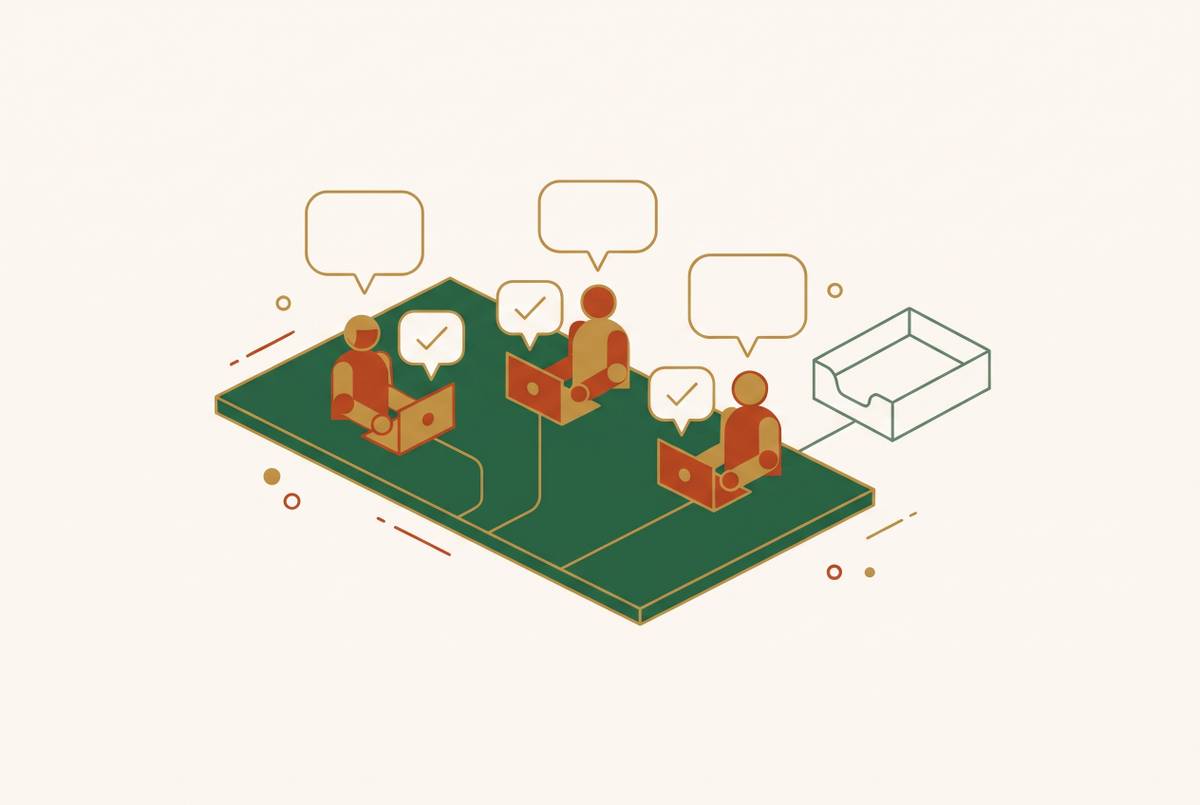
Employees have a short enrollment window to weigh coverage, what their household can afford, and their health needs. At the same time, HR receives the same questions across email, Slack, ticketing systems, and walk-ups. Employees want to know which plan fits their family, what their deductible is, and where dependent documents belong. The deadline concentrates demand precisely when individual guidance is hardest to provide.
The information may already exist, but finding it is another task. Plan details are scattered across PDFs, carrier portals, summaries, and enrollment systems that employees must navigate before they can compare options. With that much to work through, some keep last year’s elections or skip the review altogether. Employees can be confused even when they care about their benefits. That confusion can come from the work it takes to piece together a useful answer from materials in different places.
Meanwhile, HR becomes a reactive support desk. Repeat questions consume the hours needed for individualized cases, so employees with straightforward questions and those facing difficult circumstances enter the same crowded support channels.
What actually happens when employees lack decision support at enrollment
An employee who cannot understand the trade-offs may choose the most familiar plan even when it is poorly suited to their needs. A parent can end up with a high deductible the household cannot absorb, while an employee who rarely uses care may overpay for comprehensive coverage. Neither choice is resolved when enrollment closes. Its financial consequences extend through the plan year, long after the immediate support queue has cleared.
The damage also reaches the employment relationship. When employees cannot obtain a clear answer and later regret their election, they may question HR’s credibility and the value of the benefits themselves. They associate the experience with the enrollment vendor and return to the next enrollment period with less trust and more anxiety, making another difficult decision feel even harder.
Administrative errors can also lead to costs later on. Missing dependent information or an election that conflicts with eligibility rules can require corrections after submission, when remediation involves more work than an earlier warning would have. These failures are not inevitable features of enrollment. Clear explanations of each plan, eligibility checks done in time, and help from a person can keep confusion from leading to a poor election or an administrative problem.
How AI agents differ from the chatbots that failed before them
Earlier chatbots used scripts and fixed knowledge bases to answer questions, but employees needed help with their own plans. A generic explanation of an HSA cannot establish whether an employee’s specific HDHP qualifies for HSA contributions. Nor does a definition of an out-of-pocket maximum reveal the amount for a particular coverage tier.
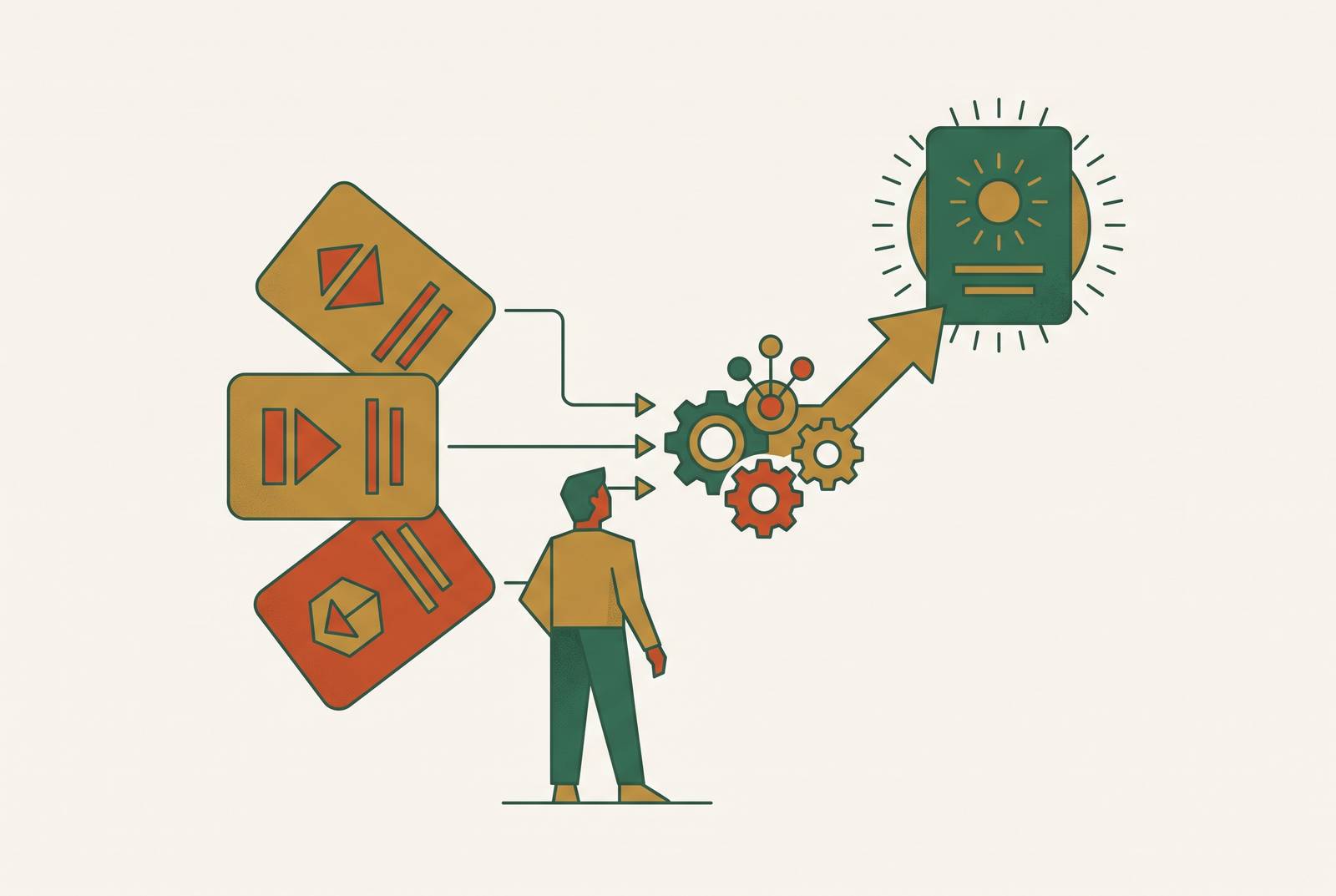
An AI agent retrieves information from plan documents, including SPDs, SBCs, rate sheets, and eligibility rules. It uses those materials to explain what the plan actually says rather than approximating an answer from general insurance knowledge. A well-designed agent should identify a specific plan’s deductible for a specific coverage tier, ask for clarification when the situation is ambiguous, and hand off when judgment is required.
Three layers provide a useful evaluation framework. The knowledge layer contains current plan materials and versioned prior-year documents, while the action layer connects the agent to HRIS, ticketing, messaging tools, and carrier portals. Those connections let it guide enrollment steps, create a support ticket, route a complex case, and log the interaction. Search alone does not complete that journey.
The governance layer sets the rules for how the agent uses those tools. It includes SSO, role-based access, audit logs, escalation logic, and sensitive data handling. ERISA plan communications require accuracy and auditability, so document versioning and controlled handoffs are deployment requirements. An agent that can answer fluently but cannot distinguish current documents or recognize its limits is not ready for benefits decision support.
Personalization at scale: how AI surfaces the right plan for each employee
Cascade AI’s 2025 report found that employees asked nine times more questions when they had AI support. That finding may show that employees found it easier to ask for help they already wanted, though it does not prove that AI made them interested in benefits. The questions were already worth asking. A conversational interface can remove the effort or social discomfort that previously kept employees from asking them.
That distinction explains why personalization goes beyond rewriting an enrollment packet. A 28-year-old who rarely visits a doctor, a parent with two young children, and an employee managing a chronic condition have different utilization patterns and financial constraints. Yet conventional enrollment materials present them with the same starting point. AI can use demographics, prior choices, and usage patterns to surface options relevant to each situation.
For example, an employee who rarely visits a doctor may be directed toward an HDHP with an HSA, while a parent with young children may be guided toward comprehensive coverage. These recommendations aim to narrow the comparison and explain trade-offs in terms the employee can use. Guidance can also surface HSA and FSA savings opportunities for eligible employees who have not understood the tax advantages.
Personalization extends to when and how support arrives. AI can remind an employee who has not started enrollment, offer contextual help when progress stalls, and adjust the communication channel based on behavior. It can also make sensitive questions about pregnancy benefits or coverage for a child with autism easier to raise than they would be with an HR colleague. Removing that friction gives employees access to guidance that a general packet cannot provide.
What HR gets back when AI handles the repeat-question volume
HR’s highest-value contribution is judgment. An employee navigating long-term leave for cancer treatment needs a focused HR partner. Automation creates room for that work. Its value therefore depends on where human time goes after routine demand is absorbed.
The appropriate division follows the nature of the question. Documentable requests about plan terms, comparisons, deadlines, dependent verification, and enrollment steps can sit with AI. Divorce, disability, serious illness, compliance edge cases, and situations involving distress remain with HR. The distinction is between a reliable answer in plan language and a judgment that depends on the employee’s full circumstances.
Human help must remain visible and accessible, rather than appearing only after an employee exhausts a series of automated responses. When the agent routes exceptions cleanly, HR can set the rules, monitor the escalation queue, and intervene where its expertise is needed.
The resulting capacity gain also supports more consistent communication. When team members are pressed for time, they may explain the same provision in slightly different ways. An agent grounded in the same current plan document can apply the same answer to the same circumstances. That consistency supports employee trust and provides the foundation for reliable eligibility checks during enrollment.
Pre-submission error detection and compliance consistency during enrollment
Errors caught before submission can be corrected while the employee is still completing the election. Missing dependent Social Security numbers, ineligible dependents, contradictory coverage selections, and unfilled required fields are all detectable against the relevant plan rules. Timing changes the administrative burden. A warning during enrollment avoids sending an error forward for carrier correction and later rework.
Eligibility checks also reduce variation between employees. When the same rules govern each submission, the outcome is less dependent on which HR team member reviews a question under deadline pressure. This is a narrow but concrete compliance function. It supports enrollment record integrity and can help avoid potential ACA reporting inaccuracies caused by incorrect enrollment information.
A governed system also preserves an audit trail. Interaction logs document what information employees received and when cases were escalated, providing a record if plan communications or enrollment outcomes are later questioned under ERISA. The employer still holds the underlying responsibility. Carriers handle claims, but the employer is still responsible for SPD accuracy, enrollment record integrity, and ACA reporting.
That scope is important for buyers seeking automated benefits compliance monitoring across a multi-jurisdiction workforce. Applying supplied plan rules consistently is not the same capability as continuously monitoring regulatory changes across states and countries. Enrollment checks help with compliance when employees make their elections, but they do not show that a platform automatically keeps every rule that applies up to date. Cases requiring legal or regulatory interpretation still need human review, rather than an answer inferred from enrollment documents alone.
What an AI-supported enrollment workflow actually looks like end to end
Before enrollment opens, outreach tailored to each employee gives them a place to start that fits their needs. An AI-supported workflow can use life changes, prior-year elections, and family status to surface plan options and answer education questions ahead of the deadline.
During the active window, the agent handles routine questions in real time and guides employees through the enrollment steps. It explains the employee’s plan as questions come up and flags errors before the employee submits the election. Complex or sensitive cases move to HR with the context already logged, so employees do not have to reconstruct the conversation. The employee remains in control of the election.
After enrollment, the system confirms elections and answers questions about ID cards and coverage start dates. It remains available for benefits-usage questions throughout the plan year, extending support beyond the moment of selection. This continuity is different from a chatbot deployed only to absorb a seasonal queue. It connects choosing benefits with understanding how to use them.
The agent needs connections to the HRIS and benefits administration platform to understand elections and eligibility, a document repository for plan language, and a ticketing or escalation system for human handoffs. Current documents are decisive. An agent still drawing on last year’s SBCs can give incorrect answers about deductibles, contribution limits, and coverage tiers, even if the surrounding workflow operates smoothly. Document currency is therefore part of the governance requirement established before deployment.
Where human judgment still has to lead
Employees retain the final election decision. AI can identify relevant options and explain the trade-offs associated with demographics and usage patterns, but it should not choose coverage on an employee’s behalf. A recommendation is decision support. This boundary preserves the employee’s role while making the comparison easier to understand.
Other boundaries depend on the kind of uncertainty involved. People facing serious illness and difficult life events need a person there to help, while cases involving late enrollment special election periods, COBRA interaction, or employee-specific ACA affordability calculations need legal and regulatory judgment. Such cases should be escalated. The time recovered from routine questions gives HR capacity to address them with the attention they require.
Trust also depends on how employees experience the system. They should understand how their data is used in recommendations and retain access to human support. Privacy controls and transparency are conditions for credible personalization from the outset. A visible handoff prevents automated guidance from becoming a barrier to assistance.
For HR leaders evaluating tools, the useful question is which requests have reliable, document-grounded answers and which require a person with full context. Designing that boundary is itself human work. An AI-native brokerage puts this division into practice through a dedicated benefits consultant backed by AI plan analysis. The AI layer handles repeat questions and personalization, while the specialist takes on escalations, plan design review, and the work of building relationships and trust.